DESIGN BLOG
Thoughts
&
Musings
Sustainable Living
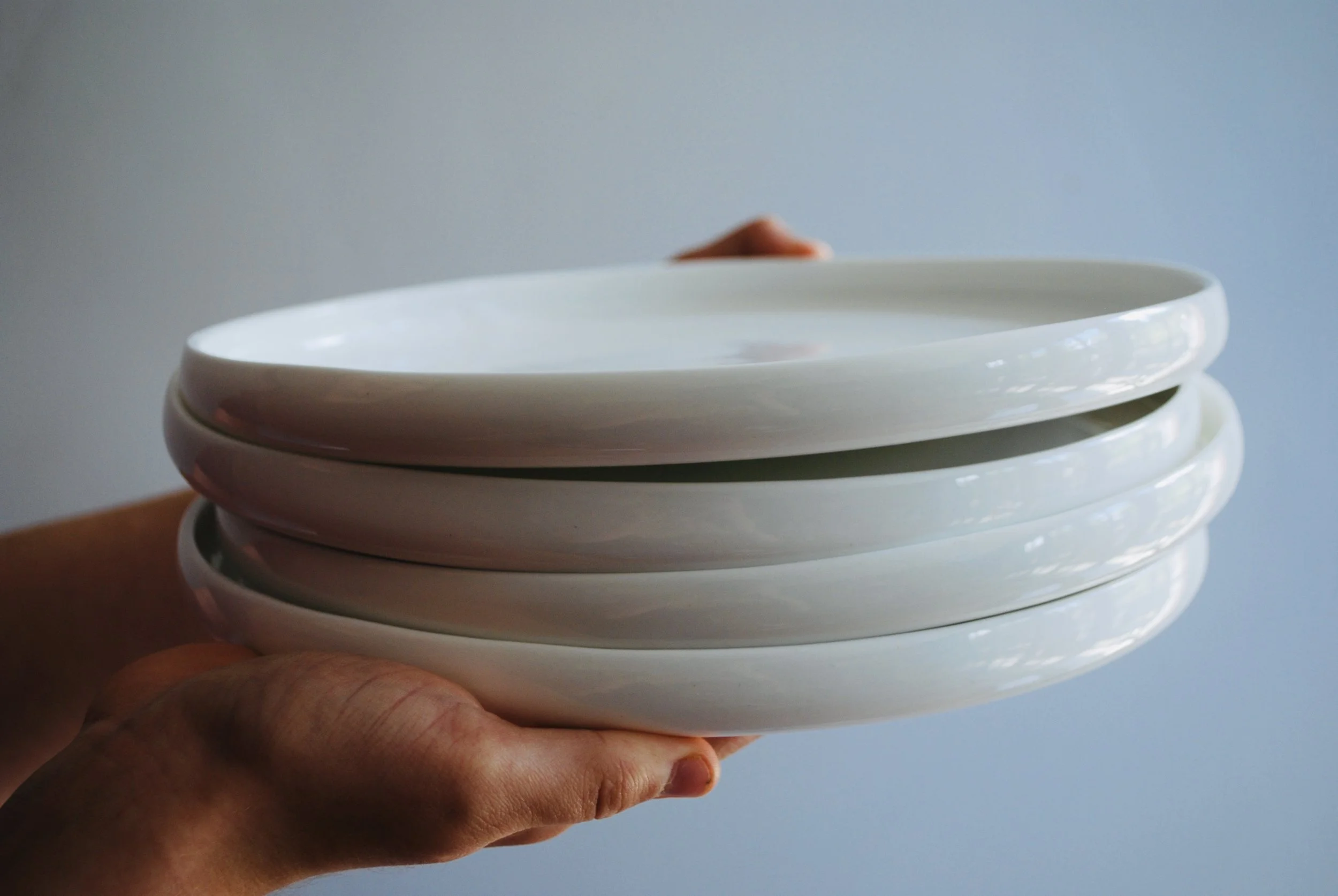
50% of these plates is made of recycled material
Golly, possibly bitten off more than I could possibly chew with this blog post title! How best can I introduce this topic? Possibly with an explanation of what I think it is to live sustainably.
To live sustainably, I feel, is to live lightly. To not take more, materially, than you can give. This permeates every decision you make in life - that’s big! But not scary if we think it through, break it down. This isn’t about making lists, buying things so this blog isn’t going to list a number of things to do or buy! Simply, it’s about consideration.
I’m hoping 2020 will have had the positive effect of making people aware of time, being aware of the smallest and subtlest things around us in our day to day. If we try to keep this in focus and not get wrapped up in the conveyor belt that is consumerism there is hope and there is the possibility to be very sustainable. We all just need to not allow ourselves to push aside the lessons we have learned.
The input of time, just that moment to pause and consider. It costs nothing but is the thing that will progress our lifestyle. It might be in choosing a plastic-free tea-bag, switching energy supplier or upgrading the insulation in your roof. Every single element moves you a step in the right direction. Every little helps, as we well know!
All my work is in the home so let me narrow the focus to tableware. Let’s think about the cups, plates and bowls in your home. Are you using charity shop finds, extending their life? Great, that’s one way! But if you’re considering purchasing new items please give a thought. The material make-up of your tableware is one of those areas that has sustainability issues. For example are your regularly replacing inexpensive mugs that chip and crack within a year or two of use?
I have deliberately chosen to produce my ‘Luna’ tableware range in fine English bone china. It is the lightest, strongest, whitest ware you’ll use. So, you won’t need to keep replacing it. The colour won’t go out of fashion and it will keep serving - literally! On a practical level the pieces are oven-proof, dishwasher and microwave safe. But did you know that over 50% of it is a re-cycled material: calcified bone ash. Sounds horrible but promise it isn’t. I am vegetarian and totally understand an animal source may cause alarm but fear not. While I choose not to eat meat I am very comfortable with using a by-product of the meat industry so it is not wasted. It can be used as fertiliser also. In addition the nature of the firing process for this type of material means that energy is saved. Any waste product (e.g something that has cracked and failed) is eliminated after the first firing (unlike most other clay firing schedules). This means the second firing is more efficient as you will not be firing pieces that will fail. That’s a win-win!
That’s just one small element of consideration given to the tableware items that are so heavily used in your home. Looking at the materials that make-up all the items we put into our homes, all the items I might specify in a design project is an important part of my practice. Start at a micro-level you’ll find other decisions follow: why buy a plastic bin-liner if you can by a bio-degradable one? Why quarry expensive stone that impacts the natural world so negatively if you can have a kitchen work-surface that looks equally beautiful and is as robust but isn’t quarried and hasn’t produced serious carbon-emissions before landing in your kitchen? A moment to think about how something is made pays dividends.
Don’t get bogged down with it all but just take a moment to consider before you buy - no matter the scale of your action. You’ll be buying better which, long term, will be better for your wallet, your sense of well-being and the wider environment. This practice I have adopted both personally and professionally.
Small steps taken by many will result in large strides to improve our planet. Join in!
Storage
Storage - we all have so much stuff!
It’s good sometimes to just take a step back from the spaces that are cluttered and somehow dis-able us, making us feel unorganised, inefficient.

Efficient storage - the holy grail? Well, no. But you do have to tackle it in the right way.
It is the topic that recurs most frequently for me, often it’s the main focus of a project.
Lack of storage will almost always be the downfall of any space - interior and exterior. Spaces cluttered with too many possessions and inadequate items of furniture abound! It’s tempting to think that the minimalist dream is the recipe to a successful interior but I’m inclined to disagree.
We all have stuff: we do things, whether it’s baking, reading, children’s toys, collecting. A truly successful interior embraces and copes with stuff. So, the most fundamental things is to approach your interior by evaluating what you need. This has two strings; firstly de-clutter - what don’t you need and secondly what do you require your space to do? So step one is evaluate. Be realistic.
So, now you have the items edited and you want to store them. Again, the temptation is to complicate - especially if you’ve been confronted with the plethora of ‘storage solutions’ presented by a company selling Kitchen cabinets! Use your space efficiently and co-ordinate storage in the space. The most effective use of space will be built-in. Why? Because you are using all the space you can, you are organising the space. And if your ££££ alarm is flashing don’t let it.
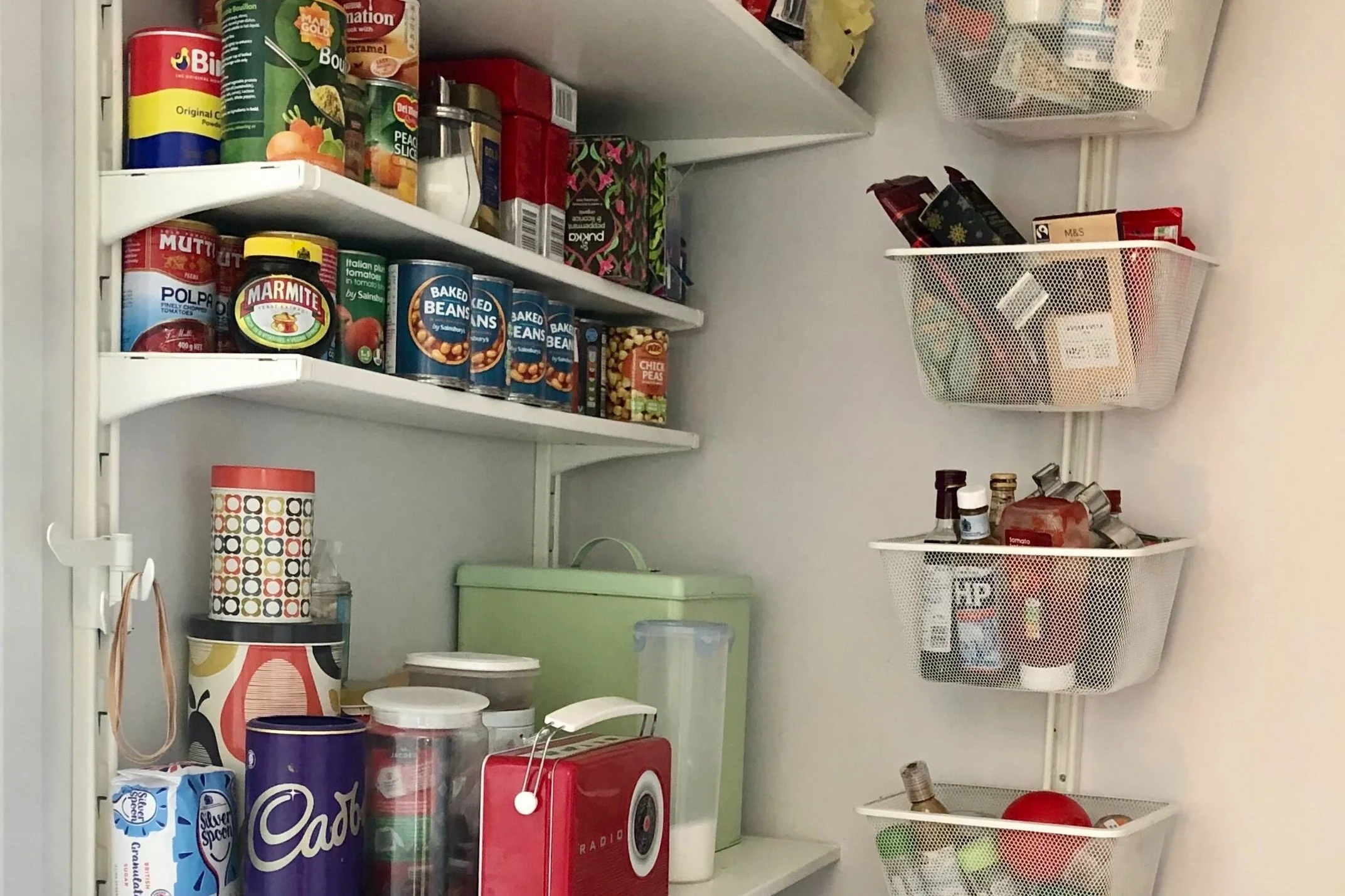
Below are two images of the same space - it’s actually my own larder! The left was taken 5 years ago (wow, time flies) and the one on the right just a few minutes before writing this blog (hand-on-heart I did not tidy up first)! It proves that the storage planned over five years ago still works. The structure, gloriously simple, re-assuringly inexpensive, is from that place we all know and love beginning with I and ending with A.
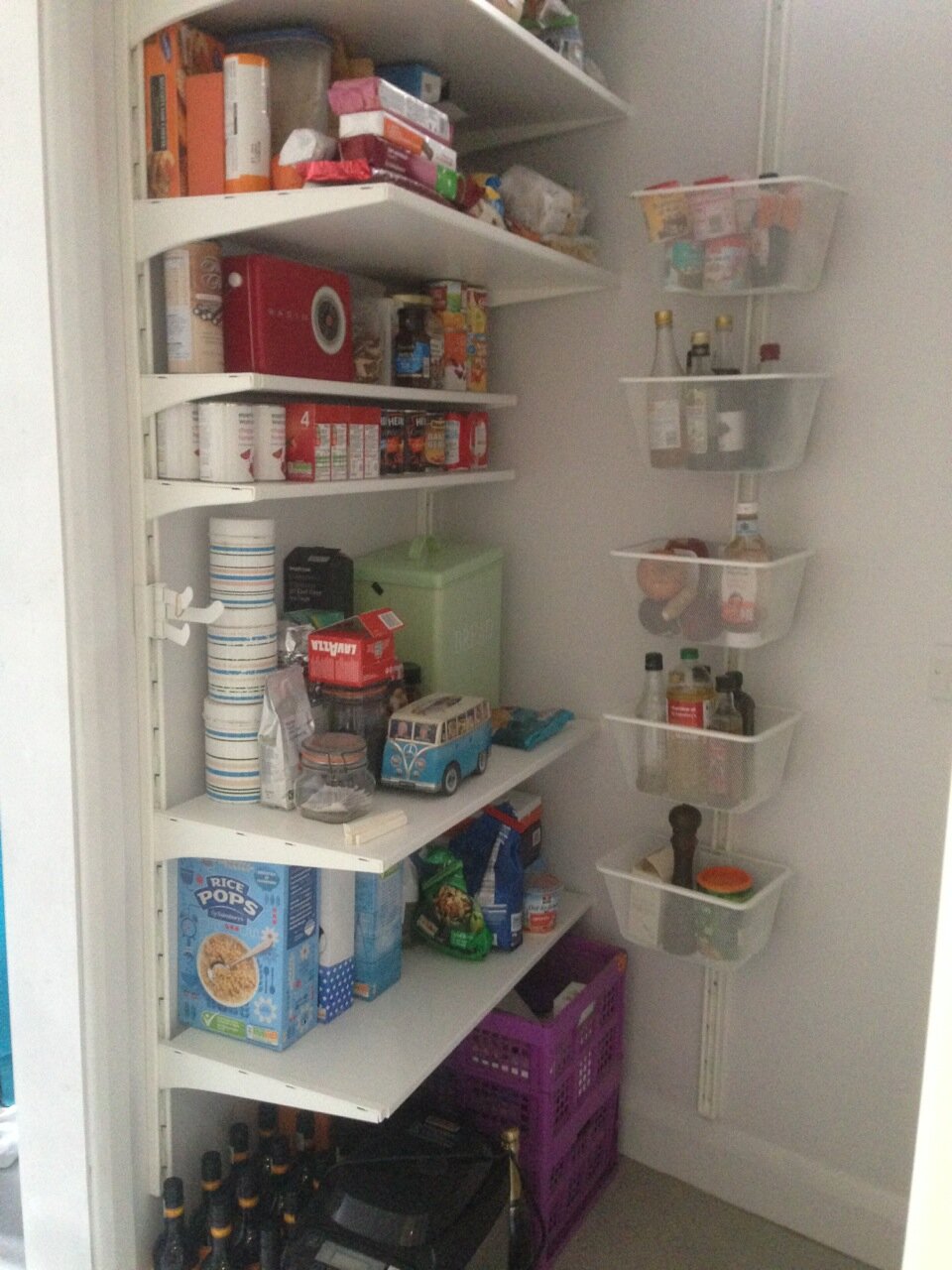
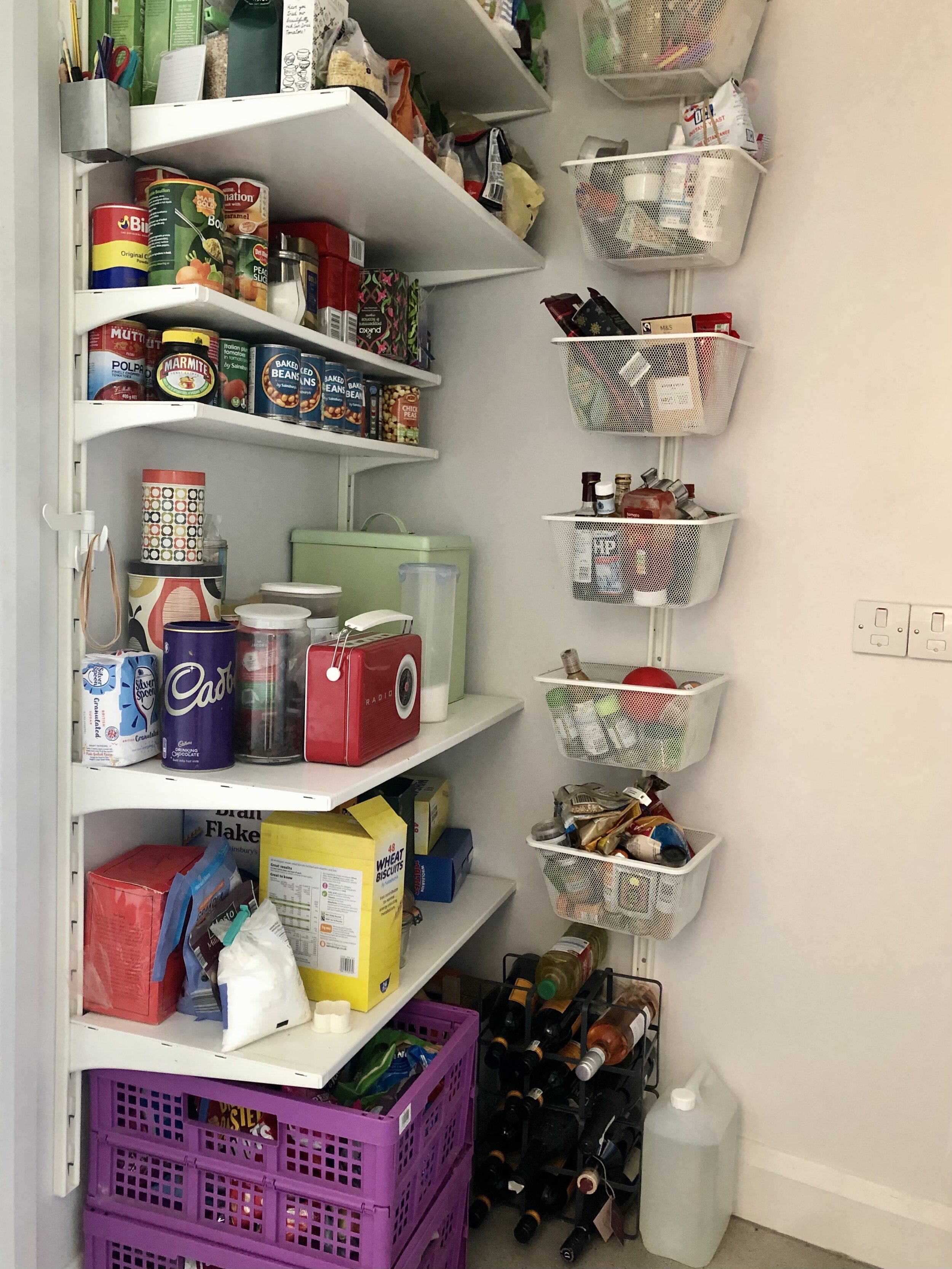
It works, it just does. Shelves are at the right heights, the right depths (and I can change them at whim). It can be messier on some occasions, tidier on others.
So, my top tip? Please, before pouring over surface finishes, the rattan on a wardrobe sliding door, the veneer on a kitchen unit, the illuminated mirror on a bathroom vanity unit organise the space. Think about what it does, whether it efficiently uses the available space in your home.
The best solutions are often the simplest.

Working with White
Lots of people have lots of opinions about their decor but one of the most fundamental detaisl is the use of white in a decorative scheme.
Ever get totally confused about white? It’s easy to disappear down a rabbit hole of opinions when it comes to interior decor; the right colours, the wrong. And white is no exception.
Working as a designer, assisting people to get the most out of their homes gives me huge pleasure and one of the most common ‘fixes’ in folks homes is to rid their space of that old favourite ‘Brilliant White’!
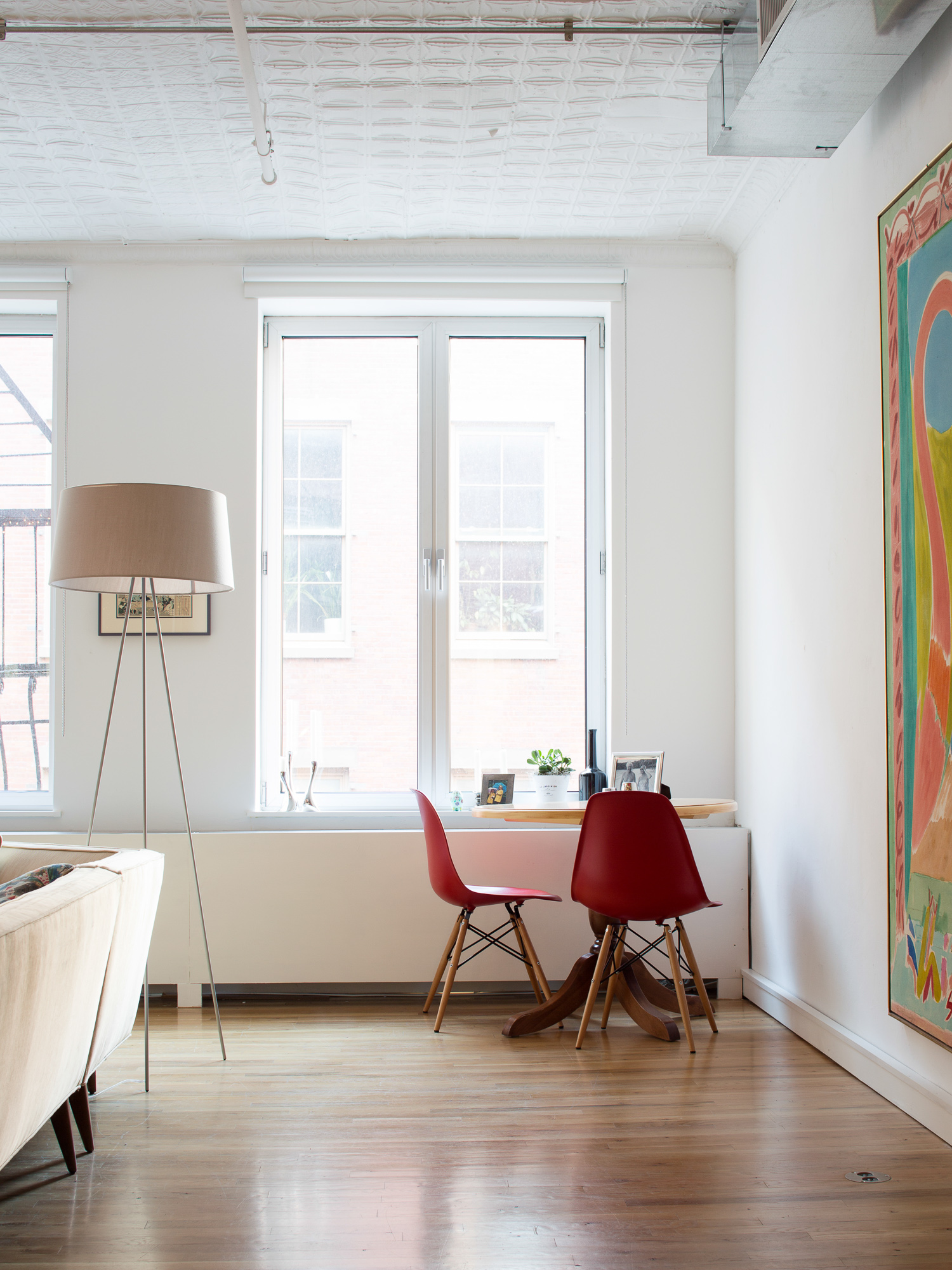
So, I thought I’d run through four favourites. Types of white that will work to bring light and sophistication to your home.
Brilliant white is used everywhere! What don’t I like about it?
Well, largely it’s the unsophisticated and over-harsh contrast its bright whiteness makes against any colour. It is used on ceilings and woodwork. It is cold and unforgiving, not fresh.
Instead how about ‘Chantilly Lace’, by Benjamin Moore. A true neutral. Softer than Brilliant White. It will compliment rather than fight other colours, softly bedding in against whatever you pair it with. If you paint a room, including ceiling you will have the freshest, lightest space. It will lift your spirits!
Now, quite simply I have next chosen two more whites: soft warmer white called ‘White Dove’ (pair it with warmer tones) and the delightfully cool ‘Paper White’, (goes with those bluer, cooler tones)! Both of these colours work well as paintwork and ceiling colours as well as being great main room colours - just define whether it’s warm or a cool tone you need!
Last, but very much not least, is my favourite ‘griege’, the beautifully soft ‘Sheep’s Wool’. Truly contemporary, neither too yellow (warm) or too blue (cold). This is the off-white that will look great in any space. Paint a whole room (yes, every surface) this colour and you’ll have the most sophisticated neutral you could wish for.
So, I’ve included a pic of real-life warts and all samples. There’s nothing like seeing the graduations in colour in the paint texture and the shadows in paper as it absorbs the paint, so I offer you nothing less! There’s very little integrity to the pre-generated colour sample ‘blobs’ that are in abundance online.
Do ignore the hand written Dove White description - it is definitely ‘White Dove’ that is sampled!

And you might of noticed the Benjamin Moore is the brand of choice here. No sponsorship involved! I was introduced to the range quite recently by a most excellent painter decorator and haven’t looked back. The quality and range of colours and finish is just fantastic. So, my I share this recommendation with you too!

Using Ceramics
What’s in your Kitchen Cupboards? Why do some pieces of your household china last longer?
Let’s get down to basics…

Ever thought about what’s in your kitchen cupboard?
Annoyed with pieces that chip easily?
Why do some pieces last longer?

So let’s start with all these terms we use when we buy tableware: earthenware, stoneware, porcelain, china, ceramic, pottery. Well, just to clarify, everything that starts as a soft clay and is fired in a kiln will be ceramic, will be pottery. Any style cues these terms may inspire can be cast to one side. What was once clay, is fired to over 1000°C, is now ceramic. People will also say ‘pottery’.
How about those other labels? Well, those other terms, earthenware, stoneware etc. describe the different types of clay used to make pieces of tableware. One can get seriously nerdy about clay minerals and the types in each of descriptions (there are more!) but we don’t need to go there. Let’s go with the physical attributes to a piece of functional tableware that will influence what you buy.
Earthenware. Light, chunky, often brightly coloured and generally inexpensive. Don’t get me wrong - earthenware can be beautiful but in day to day kitchen use it will chip. You’ll probably not have it intact forever.
Stoneware. Chunky, heavy, often with more muted decoration. The pieces will last extremely well but you’ll find them heavy in the hand.
So now Porcelain. Well China, Bone China, fits into this category too. Their whitenesses differ with porcelain being greyer and bone china having a luminous pure whiteness. Their fine-ness belies their strength and bone china in particular will be used to produce pieces so fine they’ll be translucent. Don’t let that fool you into thinking it is fragile! It isn’t. The pieces will have a lightness and a fineness to them. When it comes to colour you’ll find these are traditionally mostly available as white ware. The restaurant classics, white french porcelain and English fine bone china.
So, aesthetic aside, that’s the low-down in a nut shell. There is no one-size-fits-all recommendation but if we’re going with classic looks and longevity I’d suggest the work horses in your table ware come from this last category.

